
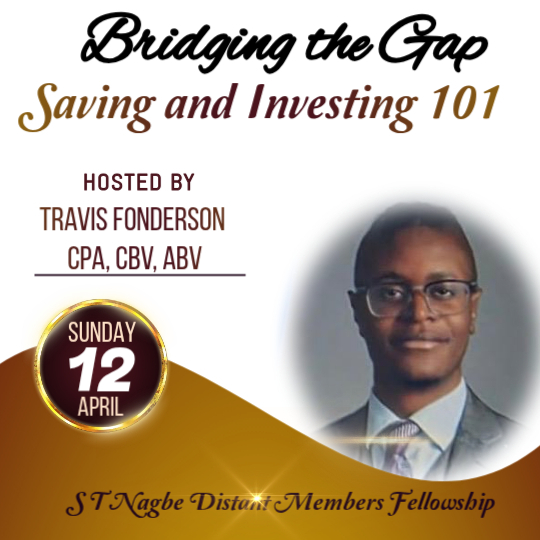
Bridging the Gap Initiative Expands Financial Literacy with Training on Saving and Investing
Bridging the Gap Initiative Expands Financial Literacy with Training on Saving and Investing
Bridging the Gap Initiative Expands Financial Literacy with Training on Saving and Investing
One value of the Christian faith is stewardship, the belief that God expects followers of Christ to become responsible managers of all the assets placed in our care. These include time, talents, spiritual resources, and money. It was within this framework that the S. T. Nagbe Distant Members Fellowship (DMF), through its Bridging the Gap Initiative, continued its commitment to economic empowerment by hosting an in‑depth financial workshop focused on Saving and Investing. The session, facilitated through a virtual training session, was facilitated by Travis Fonderson, CPA, a financial professional and one of the initiative’s core team leaders.
The training reflects DMF’s growing emphasis on equipping its members with practical tools for long‑term financial stability. Travis opened the session by underscoring a central truth: financial security is not accidental, but intentional, disciplined, and it is built over time.
Why Saving Matters
Saving is the foundation of every strong financial plan. He emphasized that saving is not merely about storing money, but about building a life, creating financial security, and ultimately achieving financial freedom. Without a consistent saving practice, he noted, individuals remain vulnerable to emergencies, debt cycles, and missed opportunities.
He encouraged participants to view saving as a non‑negotiable habit rather than an optional activity. “Your future self,” he said, “depends on the decisions you make with your money today.”
Understanding the 50/20/30 Rule
A major portion of the training focused on the 50/20/30 income rule, a simple but powerful budgeting framework designed to help individuals manage their finances with clarity and balance.
- 50% for Essentials:
This portion of income should cover basic needs such as food, housing, utilities, transportation, tithing, and clothing. Keeping essential expenses within this boundary helps prevent lifestyle inflation and financial strain.
- 20% for Financial Goals:
This category includes debt repayment, savings contributions, and investments. This portion is the engine of financial growth, noting that consistent contributions—even small ones—compound over time.
- 30% — Lifestyle Choices:
This portion is reserved for entertainment, leisure, travel, and personal enjoyment. He reminded participants that financial planning is not about deprivation but about balance and intentionality.
While the percentages may shift slightly based on individual circumstances, the rule provides a reliable starting point for anyone seeking structure and discipline.
Building a Strong Saving Practice
The facilitator then outlined a three‑step roadmap for developing a sustainable saving habit:
Contribute to Investments
Once debt is under control and an emergency fund is established, individuals should begin investing consistently. Investing is essential for long‑term wealth building and should be approached with patience and discipline—without taking on new debt.
Pay Down High‑interest Debt
High‑interest debt, especially credit card balances, can quietly erode financial progress. Travis urged participants to prioritize eliminating these debts to free up income for more productive uses.
Build an Emergency or “Rainy Day” Fund
He recommended saving enough to cover three to six months of living expenses, noting that emergencies are inevitable. A strong emergency fund prevents individuals from relying on loans or credit cards during crises.
Empowering the DMF Community
The training is part of DMF’s broader mission to “bridge the gap” in areas such as financial literacy, career development, and personal growth. By offering practical, accessible education, the initiative aims to strengthen families, promote economic resilience, and empower members to make informed financial decisions.
Participants expressed appreciation for the clarity and practicality of the session, noting that the tools provided will help them better manage their income, reduce financial stress, and plan for the future.
The Bridging the Gap Initiative will continue hosting workshops throughout the year, expanding its focus to include budgeting, credit management, entrepreneurship, and retirement planning. These workshops will equip the current and future generations of DMF members to become responsible stewards to the glory of God and for the benefit of the community of faith.


